
Ökologie des Verlusts. Künstlerische Strategien jenseits von Trauer
Verlust kann zunächst als individuelles Empfinden erscheinen, das Erinnern, Handeln und Denken von Subjekten durchzieht. Zugleich ist Verlust ein in gesellschaftliche und materielle Prozesse eingebettetes Phänomen. Industriekapitalistische Produktionsweisen, militärische Konflikte und koloniale Kontinuitäten sind immer auch anthropogene Eingriffe in Ökosysteme und erzeugen fortlaufend Verluste, die sich in künstlerischen Arbeiten nicht nur motivisch wiederfinden, sondern von diesen auch in forschender bzw. epistemischer Weise verfolgt werden.
Verluste betreffen nicht nur physische Umwelten, sondern ebenso soziale, kulturelle und epistemische Ordnungen. Dennoch werden sie häufig nicht als systemisches Problem verhandelt, sondern als isolierte Einzelfälle oder unvermeidliche Begleiterscheinungen von Fortschritt (Reckwitz).
Zahlreiche künstlerische und theoretische Auseinandersetzungen mit Verlust verbleiben im Modus des Betrauerns. Sie machen die Erfahrung des Verlusts zwar sinnlich greifbar, inszenieren ihn jedoch oft als schicksalhaft oder melancholisch. Solche „Ästhetiken des Betrauerns“ neigen dazu, Verlust zu individualisieren und ihn zugleich zu entpolitisieren. Anstatt systemische Ursachen offenzulegen, reproduzieren sie Formen passiver Betroffenheit und können so eine resignative Haltung gegenüber gegenwärtigen Krisen verstärken. Künstlerische Darstellungen von Verlust werden auf diese Weise selbst Teil jener gouvernementalen Mechanismen (Foucault), die Verluste administrativ und prognostisch verarbeiten (Esposito), statt sie kritisch zu befragen: Verluste werden emotionalisiert, während geopolitische Interessen, Ressourcenökonomien und technologische Infrastrukturen in den Hintergrund treten.
 Das Projekt entwickelt eine alternative Perspektive: Verlust wird als Moment einer komplexen soziotechnischen Ökologie verstanden, in der technologische Infrastrukturen, ökonomische und politische Interessen, koloniale Machtverhältnisse und extraktive Prozesse ineinandergreifen. Insofern sind für das Projekt solche künstlerischen Arbeiten und Praktiken der Gegenwartskunst von Interesse, die etwa mit medialen respektive dokumentarischen Praktiken Verlustphänomene als ein Gefüge (Deleuze/Guattari) aus Technologie, Macht, Kolonialität und ökologischer Zerstörung visualisieren. Ziel ist es, künstlerische Arbeiten nicht als bloßen Ausdruck von Trauer zu lesen, sondern als analytische und kritische Verfahren, die Wahrnehmungs- und Deutungsmuster gezielt irritieren, verschieben und rekonfigurieren.
Untersucht werden (somit) künstlerische Strategien, die Verlust nicht als isoliertes Ereignis darstellen, sondern als Resultat komplexer gesellschaftlicher, technologischer und ökologischer Prozesse analysieren. Fortschritt wird in der Moderne und Gegenwart als kontinuierliche Verbesserung gedacht. Verluste erscheinen als irreversible Störungen dieses Narrativs; daher wird davon ausgegangen, dass Verlust in der Moderne häufig unsichtbar gemacht oder als unvermeidliche Nebenfolge von Fortschritt umgedeutet wird („Verlustparadoxie“, Reckwitz) und, dass Prozesse des Erinnerns stets mit Formen des (organisierten) Vergessens verschränkt sind (Esposito). Die künstlerischen Praktiken greifen in die bestehenden Ordnungen des Sichtbarmachens und Ausblendens ein, indem sie die Bedingungen von Verlustwahrnehmung und Dokumentation selbst zum Gegenstand machen.
Das Projekt untersucht, wie zeitgenössische Kunst Verlust als Ausgangspunkt nutzt, um gesellschaftliche, technologische und ökologische Verflechtungen zu analysieren. Es versteht künstlerische Strategien als aktive Formen der Kritik und trägt, durch die Verbindung kunsthistorischer, medientheoretischer, soziologischer und ökologischer Ansätze, zur Erweiterung bestehender Debatten über Verlust, Krise und Repräsentation bei. Im Zentrum steht die Frage, wie neue Formen der Erkenntnisproduktion entstehen können, die den komplexen Bedingungen gegenwärtiger ökologischer Herausforderungen gerecht werden.
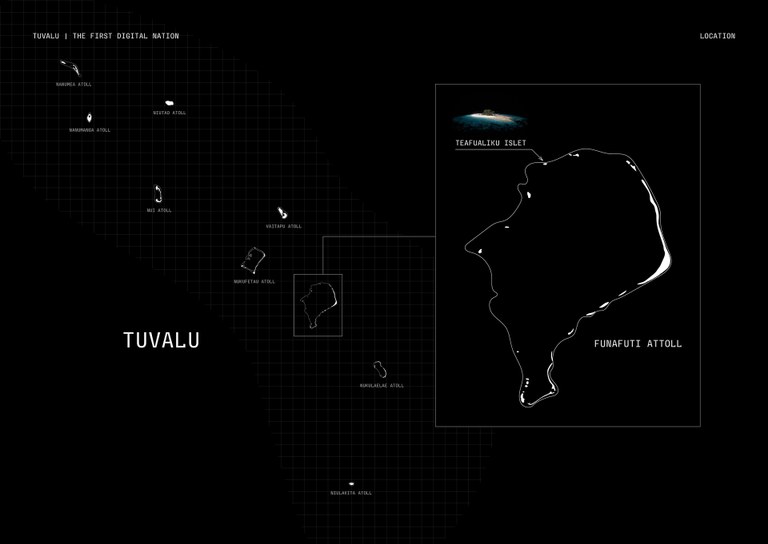
[Abbildung: “Government of Tuvalu ‘The First Digital Nation’” by Dogra5 (part of Accenture Song), a marketing campaign consisting of a film and a website (shown here: video still), Australia, released November 15, 2022]
_____
Ecologies of Loss. Artistic Strategies Beyond Mourning
The project investigates contemporary artistic strategies that do not mourn loss but use it as an analytical tool to expose the entanglements of technology, power, coloniality, and ecological destruction. How do these practices operate as interventions in social processes of remembering and forgetting, and how do they generate new forms of the documentary in the process?
Loss may at first appear as an individual experience permeating the remembering, acting, and thinking of subjects. At the same time, it is a phenomenon embedded in social and material processes. Industrial-capitalist modes of production, military conflicts, and colonial continuities are always also anthropogenic interventions in ecosystems, continuously producing losses that reappear in artistic works not only as motifs but also as subjects of epistemic and investigative engagement.
Losses affect not only physical environments but also social, cultural, and epistemic orders. Yet they are often not addressed as systemic problems but treated as isolated incidents or unavoidable side effects of progress (Reckwitz).
Numerous artistic and theoretical engagements with loss remain within the mode of mourning. They may render the experience of loss sensually tangible, yet often stage it as fateful or melancholic. Such “aesthetics of mourning” tend to individualize and depoliticize loss. Instead of uncovering systemic causes, they reproduce forms of passive affect and may reinforce a resigned stance toward current crises. In this way, artistic representations of loss become part of the very governmental mechanisms (Foucault) that administratively and prognostically process losses (Esposito) rather than critically interrogating them: losses are emotionalized, while geopolitical interests, resource economies, and technological infrastructures recede into the background.
The project develops an alternative perspective: loss is conceived as a moment within a complex sociotechnical ecology in which technological infrastructures, economic and political interests, colonial power relations, and extractive processes intertwine. Accordingly, the project focuses on contemporary artistic works and practices that, through media-based and documentary approaches, visualize phenomena of loss as assemblages (Deleuze/Guattari) of technology, power, coloniality, and ecological destruction. The aim is not to read artistic works merely as expressions of grief but as analytical and critical procedures that deliberately unsettle, shift, and reconfigure perceptual and interpretive frameworks.
The study thus examines artistic strategies that do not portray loss as an isolated event but analyze it as the result of complex social, technological, and ecological processes. In modern and contemporary contexts, progress is conceived as continuous improvement. Losses appear as irreversible disruptions of this narrative; hence, it is assumed that in modernity, loss is often rendered invisible or reinterpreted as an inevitable by-product of progress (“loss paradox,” Reckwitz), and that processes of remembering are always interwoven with forms of (organized) forgetting (Esposito). Artistic practices intervene in existing regimes of visibility and omission by making the very conditions of perceiving and documenting loss their subject.
The project investigates how contemporary art uses loss as a point of departure to analyze social, technological, and ecological entanglements. It understands artistic strategies as active forms of critique and, by combining art-historical, media-theoretical, sociological, and ecological perspectives, contributes to expanding current debates on loss, crisis, and representation. At its core lies the question of how new forms of knowledge production can emerge that do justice to the complex conditions of present ecological challenges.
[Caption: “Government of Tuvalu ‘The First Digital Nation’” by Dogra5 (part of Accenture Song), a marketing campaign consisting of a film and a website (shown here: video still), Australia, released November 15, 2022]
Projektlaufzeit/Duration:
Seit/Since April 2026 (am/at ZI)