
Dr. Fatma Serra Inan
Preisträgerin Theodor-Fischer-Preis 2026
Forschungsaufenthalt: April bis Juli 2026
Vita
- 04/2026–07/2026 | Theodor-Fischer-Preis Fellow, Zentralinstitut für Kunstgeschichte, Munich
- 2020–2025 | Dual PhD Degree at Ludwig-Maximilians-Universität München, Department of Art History & KU Leuven, Department of Architecture. Dissertation: “Architecture of Diplomacy: Spatial Dialogues between the Ottoman and Habsburg Empires, 1500–1700,” summa cum laude. Supervisors: Stephan Hoppe and Krista De Jonge.
- 03/2025–06/2025 | Doctoral Researcher in the European Cooperation Project: MARY4ALL – Music & Arts of the Renaissance: Women’s Female Patronage Re-activated for All with Digital Technologies, KU Leuven, Department of Architecture.
- 01/2025–06/2025 | Research mobility, KU Leuven
- 05/2023–04/2024 | Research Associate (Wissenschaftliche Mitarbeiterin), LMU Munich, Department of Art History
- 05/2022–07/2022 | Professional Secondment, Staatliche Schlösser und Gärten Baden-Württemberg
- 09/2021–12/2021 | Research mobility, KU Leuven
- 2020–2023 | Early Stage Researcher, Horizon 2020 Marie Skłodowska-Curie Innovative Training Network (MSCA-ITN): PALAMUSTO – Research and Training for the Palace Museum of Tomorrow, at LMU Munich, Department of Art History
- 2017–2019 | Research Assistant, Getty Foundation Keeping It Modern Project: Research and Conservation Planning for the METU Faculty of Architecture Building Complex, at Middle East Technical University (METU), Department of Architecture
- 2017–2018 | Teaching Assistant, METU Ankara, Department of Architecture
- 2019–2020 | Research and Teaching Assistant, Izmir Institute of Technology (IZTECH)
- 2016–2019 | Master of Architecture (English), METU Ankara, Department of Architecture. Thesis: “In-Between Spaces: METU Faculty of Architecture Building Complex.” Supervisor: Ayşen Savaş.
- 10/2015–02/2016 | Erasmus+ Exchange Student, Politecnico di Torino, Department of Architecture
- 2011–2016 | Bachelor of Architecture (English), METU Ankara
Selected Publications and Presentations
- Fatma Serra İnan, “Negotiating Hospitality and Representation: Elçi Hanı versus Der Gasthof Zum Goldenen Lamm,” in Building on Foreign Territory: An Architectural History of Diplomacy, edited by Fredie Floré, Angela Gigliotti, and Anne-Françoise Morel. Bloomsbury Publishing Plc (forthcoming).
- Fatma Serra İnan, “Between Hospitality and Hostility: Sensory Experiences in the Ottoman Diplomatic Court Protocol during the Seventeenth Century.” Paper presented at EMSE – Early Modern Sensory Encounters, Kellogg College, University of Oxford, 8–9 June 2023.
- Fatma Serra İnan, “Spatio-Temporal Mapping of Habsburg-Ottoman Diplomatic Reception Event(s): A GIS-based Approach.” Paper presented at RSA Virtual 2022 – Renaissance Society of America, 30 November–3 December 2022.
- Fatma Serra İnan, “Spaces of Diplomacy in Sixteenth-Century Istanbul.” Paper presented at AISU – Italian Association of Urban History, International Congress X, Turin, 6–10 September 2022.
- Serra İnan and Ayça Tunç Cox, “The Queen’s Body: The Favourite by Yorgos Lanthimos.” Film International 20:1 (2022), pp. 27–42.
_______________
Fatma Serra Inan about her dissertation “Architecture of Diplomacy: Spatial Dialogues between Ottoman and Habsburg Empires, 1500–1700”, which was awarded with the Theodor Fischer Award 2026:
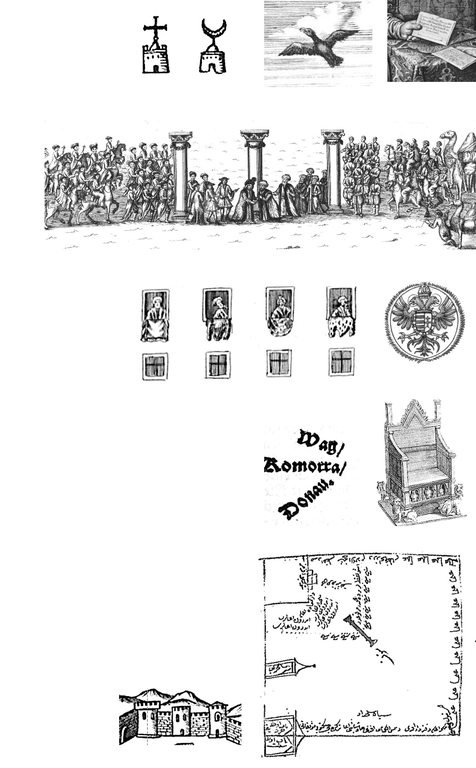 This research investigates the spatiality of diplomacy between the Ottoman and Habsburg Empires during the sixteenth and seventeenth centuries. Considering early modern diplomacy as a spatial dialogue, it seeks to understand how spaces actively shaped - and in turn were shaped by - political and international structures of power. At the outset of this period, Ottoman expansion in the Balkans brought these two empires into direct conflict, resulting in ongoing skirmishes and several major wars. Amidst the perpetual hostilities, diplomacy emerged as an equally important arena for achieving peace, where authority, hierarchy, and hospitality were negotiated. This tension between conflict and reconciliation was materially expressed in the organization of diplomatic encounters, offering a compelling context for this study. Focusing on diplomacy that extends beyond a single region, the interaction itself is positioned at the centre of the research. Ambassadors, as crucial transregional actors of the early modern period, serve as the main protagonists of the study. Their accounts constitute the primary sources, supported by other archival records and iconographic materials, each representing the role of space and its perception in different media. By following the narrative structure of these accounts, the study approaches the ambassadorial mission as a continuous process of diplomatic reception. Thus, beyond the so-called "throne room" and the symbolic encounter with the sovereign, it explores the wider range of spaces of cross-cultural encounters, encompassing the diplomatic landscape of the early modern period. Drawing on spatial, performative, and sensory methods, this approach investigates spaces and ceremonies of diplomatic practice as mutually transformative. At the territorial scale, the border zone between the two empires is examined in connection with border crossing ceremonies and the intercity routes of ambassadors' journeys. At the urban scale, ceremonial entries, the localization of ambassador lodgings, and the social life of entourages are analysed in relation to the fabric of early modern Istanbul and Vienna. At the architectural scale, the sovereign residences and ambassador lodgings are explored regarding the reception of ambassadors and the provision of accommodation. Across all three scales, space emerges as bent by orchestrated performances and instrumental in displaying hierarchy. Hospitality - a theoretical lens for the research - was embodied in these diplomatic practices, forming a 'coded language' that communicated the political climate to both local and international spectators. To track the movement of multiple ambassadors across scales, in relation to key diplomatic practices, and within their evolving architectural contexts, the study employs a spatio-temporal GIS model. This approach creates a thick mapping that structures narrative data found in diplomatic accounts into an adaptable dataset, helps analyse spatial, temporal, and performative patterns, and makes the interplay between spatial and social constructs more visible. At the intersection of architecture, diplomacy, and ritual, this research contributes to a nuanced understanding of the dynamics of socio-political and spatial constellations in early modern cross-cultural diplomacy. It challenges the mythified or Disneyfied view of the throne (room) by recontextualizing it within the broader context of reception events. In doing so, the kinesthetic experience of space is underscored, highlighting the impact of movement and multisensory perception. The study further expands the field of architectures of diplomacy by moving beyond the focus on post-1800 embassy buildings to scrutinize the wider landscape of diplomatic encounters. Ultimately, by examining how bodies interacted with space and how spaces were instrumentalized to serve authority, it not only sheds light on the past but also deepens our understanding of modern political rituals and the materialization of power.
[Caption: Selected details from various ambassadorial print accounts, representing the material and spatial dimensions of diplomatic practices]