
Structures of Peacemaking and Peacekeeping | Emergent Architectures of Early Modern Diplomacy
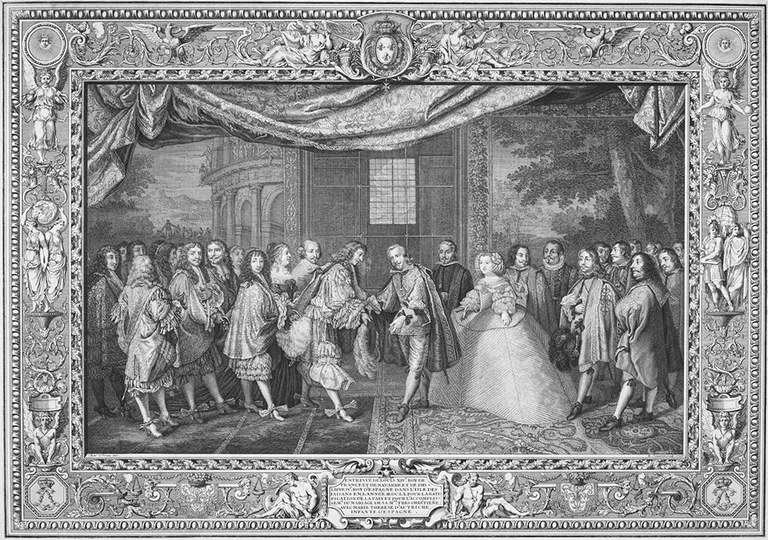 The early modern period was formative for modern diplomatic relations. New spatial configurations had to be developed to meet the logistical demands of diplomatic exchanges, orchestrate ceremonies involving cross-cultural encounters, and convey desired messages to both local and international audiences at the same time. Diplomats were vigilant to material and performative nuances, meticulously documented in their accounts, which granted architecture a powerful agency. Particularly fruitful for new typologies of architecture were the processes of peace negotiations, which will be at the focus of my fellowship at the Zentralinstitut to develop a postdoctoral project.
This subject departs from a part of my doctoral research, in which I analyzed the transformation of the space between the Habsburg and Ottoman Empires from an ambiguous border zone into a defined borderline. This transformation was shaped by the increasingly elaborate diplomatic ceremonial, changing both the physicality and political signification of the border. The cross-cultural interaction involved in this diplomacy became most concrete during the making of the Treaty of Karlowitz. The conference site was built as a perfect embodiment of the ideal of diplomatic parity: The conference chamber at the center brought an Ottoman sofa in front of the round table (a token of peace negotiations since the Peace of Westphalia), joining different customs in a composite order.
In my new project, I want to explore such ad hoc, temporary, and hybrid architectures of peace negotiations that emerged in parallel with the founding of a new international order, between Westphalia and the Congress of Vienna (1648–1815). My research focuses on two contact zones: peacemaking structures and accommodations for ambassadors before purpose-built embassy houses.
Case studies such as Peace of the Pyrenees (1659), Nijmegen (1678), Rijswijk (1697), Utrecht (1713), Tilsit (1807), and the Congress of Vienna (1814–15) provide a large array of spatialities and models for peacemaking. Across a diverse set of typologies, ranging from temporary border structures to adjusted settings in town halls or court residences, I will analyze how the striving for balance, hegemony, or neutrality was organized in the spatiality of negotiations. On the other hand, the materiality of peacemaking exceeded the conference room and took form in diverse propaganda media. Through years-long negotiations, public celebrations, and the need to accommodate large retinues of incoming diplomats, peacemaking processes had a profound impact on cities. In this context, the accommodations were a second site for hybrid architectural practices – a second focus for the project – where local spaces were adapted to the preferred styles and customs of foreign ambassadors.
The objective of my research is two-fold: First, I seek to understand how a new international order was negotiated, embodied, and represented through spatial, architectural practices. Second, looking at peacemaking as a vector for cross-cultural interactions, I will identify otherwise invisible hybrid architectures emerging at contact zones. Within the intellectual context of the Enlightenment, these cases present a striking context to examine how spatially organized, material practices allowed developing conceptions of peace, sovereignty, and international order to take shape within European power dynamics.
[Caption: Edmé Jeaurat, after Charles Le Brun, Louis XIV with Philip IV of Spain, 1728, etching on paper, 38.40 x 54.80 cm (sheet), Scottish National Gallery of Modern Art, Edinburgh, accession no. P 9207. URL: https://www.nationalgalleries.org/art-and-artists/50678]